It’s 2019 and I find myself staring at this place. The field where Jamie learned to fly a kite and where we picnicked in the summer. The basketball court where Eliza learned to ride a bike. The path they’ve circled again and again on their scooters racing to see how fast they could make it around. The playground they’ve spent almost every afternoon for the past year creating games with strangers, playing with classmates, working out their differences with friends and strangers alike.
This is the place we stumbled upon on that first full day in New York years before and it became our resting place for that first lonely summer as we tried to figure it all out. I’ve made polite conversations with other parents, developed friendships with moms and dads, and have learned the rhythms and rules of this unique space.
It felt like ours.
Except, on that day in 2019, it wasn’t anymore. Sure we got to keep it for a little while longer while Eliza finished the school year across the street. But, after that, we began to come here less and less because that’s what you do when you live in different neighborhoods.
The truth is, we liked our new playground better. Objectively, it is better…bigger, cleaner, cooler. It’s attached to a beautiful park that goes on forever. It’s in close proximity to other playgrounds. It has so much potential and will soon become the type of home we’re leaving.
Of course, it also had different rules and rhythms that we hadn’t yet learned. There are general rules that apply to all city playgrounds, but you only learn the specific ones by settling and staying and paying attention. This new playground became a kind of sacred that we needed and became a healing ground with an abundance of new community and friendships.
Looking back, as much as we had loved this first playground and as many happy memories as we have there, it was also a bittersweet place for me. Because it’s there, in that neighborhood, in that playground that we began to wrestle with big feelings and started the arduous process of learning new realities. It’s there that we came in the middle of the day when we began our homeschool journey. It’s lonely there in the middle of the day.
It’s 2024, almost exactly 5 years later and I am struck by how little we knew about where the next several years would take us. Into a new school where we made life-long (i.e. still talking regularly) friends, into a global pandemic, a move across the country, new ministry opportunities, new diagnoses (for several of us), new traumas, new injustices and another move, but this time back to something familiar. But so much of what we were learning then, still applies now.
Because once again, we are on the precipice of a new journey. Our family is changing and shifting. We won’t return to what we were before, and, yes, there’s loss there, but there’s so much beauty ahead.
Back then I couldn’t quite imagine the new. It was easy to go kicking and screaming into this new change because some days I just wanted the old rhythms back. I wanted the sweetness and innocence that used to mark our young children days back. It’s easy to romanticize those young years, isn’t it?
But I think to keep that would only be possible at the expense of both our son and our daughter. I think what we are doing is processing both J’s story and E’s story with them in real time. It’s work they have to do and it’s work that many adopted children don’t do until they are much, much older. But they have both chosen to hold these sacred things with us, to process them aloud in our home. Goodness, what a gift.
But it’s an immense privilege just as it is a painful learning process. As an avid conflict-avoider, it can be easy for me to think that hard equals bad. But I think this was always going to be painful. Because when your family is formed out of the pain of a family breaking…it would be dishonest to work it all out in bliss.
(For more on this, read All You Can Ever Know by Nicole Chung. Seriously, it’s a beautiful memoir by an adult adoptee. Adoptive parent or not, her story is worth your time.)
There is this beautiful scene in The Voyage of the Dawn Treader by C.S. Lewis where a young boy named Eustace has been turned into a dragon on account of his own selfishness and greed. As a boy, Eustace was annoying to everyone, but he undergoes a profound change in this dragon state. When it comes time for him to strip away the dragon skin to return to his boyhood, try as he might, he can’t do it alone. Aslan must help. This is how Eustace recounts the story (I weep every time I read it):
“Well, he peeled the beastly stuff right off – just as I thought I’d done it myself the other three times, only they hadn’t hurt – and there it was lying on the grass, only ever so much thicker, and darker, and more knobbly-looking than the others had been. And there was I smooth and soft as a peeled switch and smaller than I had been. Then he caught hold of me – I didn’t like that much for I was very tender underneath now that I’d no skin on — and threw me into the water. It smarted like anything but only for a moment. After that it became perfectly delicious and as soon as I started swimming and splashing I found that all the pain had gone from my arm. And then I saw why. I’d turned into a boy again. . . .”
But I guess at the end of the day, what I’m learning to recognize is that these days, mess and all, are also good.
We’ve spent much of our time post-pandemic in the middle of that painful last tearing away of the old, but in recent months we have felt the deliciousness of the water. It hurts but yet feels healing all at once.
Friends, it’s not a perfect process. As we all learn new skills and ways of functioning and processing together, our days are messy. They’re loud and full of high emotions.
As an adoptive family, we get lots of questions and comments. They provide for lots of awkward moments but they rarely keep me up at night.
Except one. One eats away at me and it comes in many forms.
The other day in the grocery store, it was just me and Jamie. Jamie was being his normal, silly and inquisitive self. As she was scanning my groceries, the checkout lady looked at him and then looked at me and simply asked, ‘Is he yours?” When I responded that he was, she followed up with “Is he adopted?”
I get this question a lot, so I had an answer. I knew the drill. But there was something very different this time.
This time Jamie was listening. After our exchange, Jamie looked at me and very innocently asked, “What did she say?” And when I told him, he immediately asked, “Why?”
As I looked at my precious boy, my heart broke. As I responded politely to the woman asking the question, I felt tears in the back of my eyes. And as I told Jamie a better version of what she had asked, I realized that I need to teach my children how to handle this question.
And the question comes in many forms:
Is he/she yours? Are they adopted? Do you have any children of your own? Are they real brother and sister? Are you their “real” mom / dad?
In addition to teaching them to brush their teeth, go potty, ask polite questions and pick up their shoes … In addition to family dance parties, group hugs and Lego building … I need to teach my kids how to handle someone questioning whether they belong to me or to their daddy or to each other.
I need to help prepare them that people will ask questions in such a way that it will call into question everything they have always known.
I need to prepare them.
And I’ve got to start now.
I know that this woman and the many, many others who have asked don’t mean any harm. I tend to assume the best of people, and this case is no different. And, most of the time, the comment I get most is about my children’s eye lashes and beautiful smiles.
I don’t blame that woman. She didn’t know me or my children and she was making polite conversation.
I’ve been wrestling with this blog post for some time. Adoptive families will tell you that this is a constant theme, especially if your family is very obviously formed by adoption.
And I’ve written lots about this subject. Some I’ve published, others are still too intimate, too personal to let the world read.
In the end, here is what I want people to know. Questions aren’t bad. I’m a teacher. I love questions. If you ask one, I will feel compelled to answer.
But, I need you to understand something. This is personal. Asking questions about our adoption story is like asking someone for their birth story. It’s not necessarily as graphic, but it is just as personal.
So, here’s my unsolicited advice: If you are interacting with an adoptive family that you have no personal relationship with, think about the question before you ask the question.
(For help knowing if a question is appropriate, I suggest you watch this.)
And, if you’re never going to see them again, don’t ask. Instead, squelch your curiosity and simply say, “they’re precious.” And leave it at that.
If you have a relationship with the family and are sincerely curious, my best advice is to admit that you don’t know exactly how to ask the question and proceed from there. As I said earlier, Brandon and I are very open and we love answering questions in the context of a personal conversation.
But here is my one request. Do not (I repeat) do not ask the question in front of the child. Just don’t. They hear more than you think and, even if they’re 18, they probably wont enjoy the question.
So, seriously, don’t.
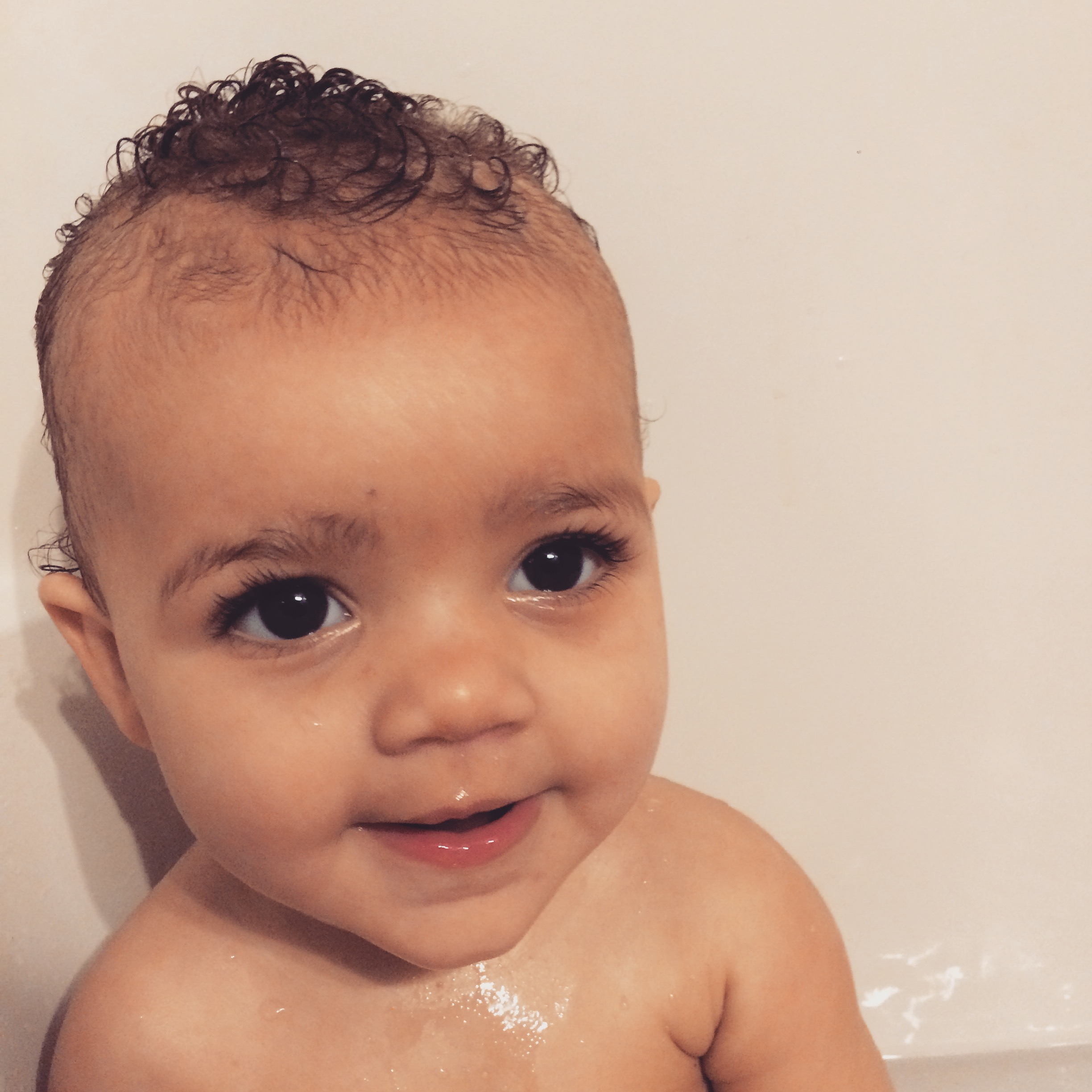
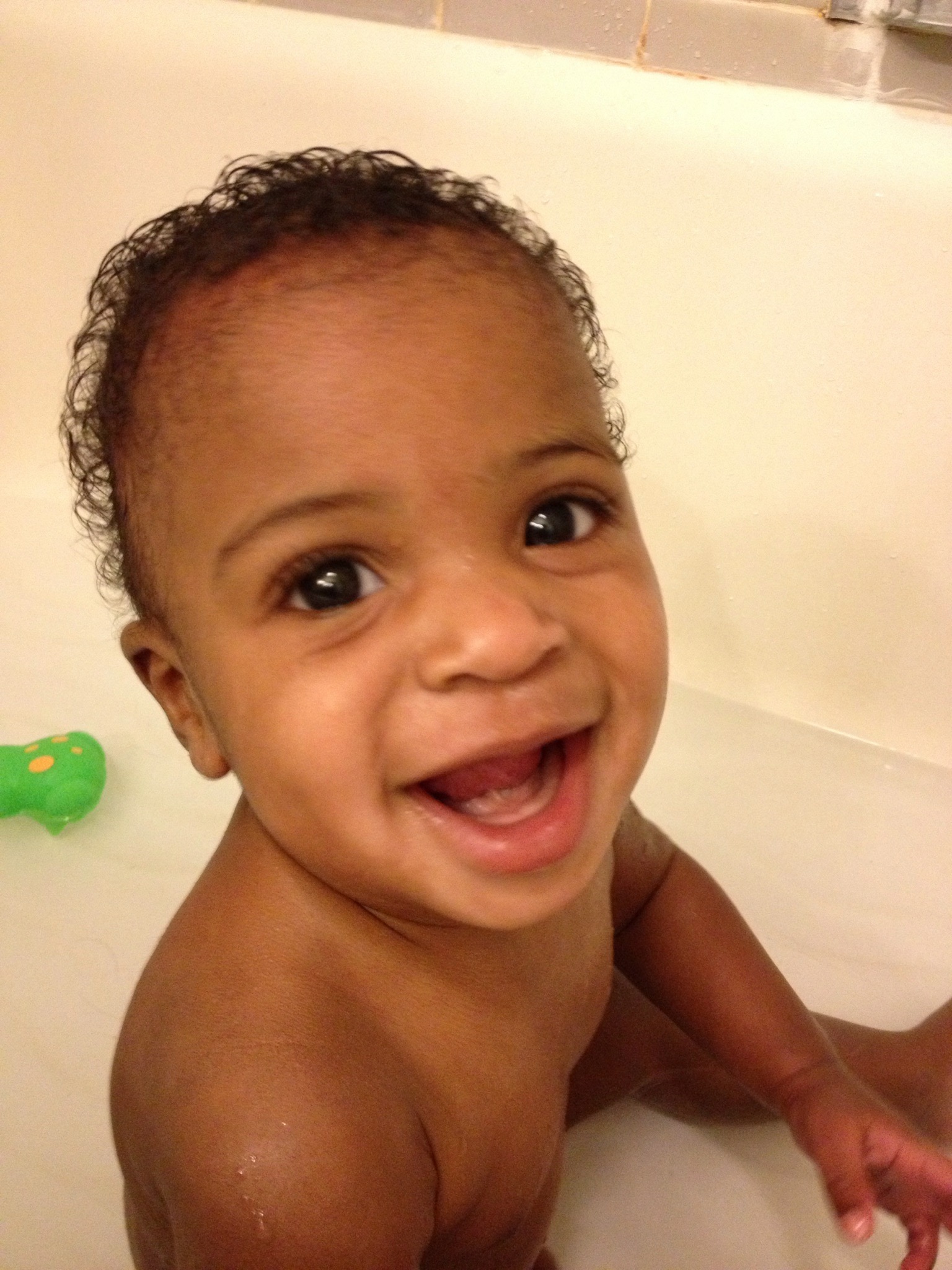
In conclusion, here are my very own children, a very real brother and sister, at around the same age taking a bath. They both have beautiful curls and the kind of eyes that cause (and convey) all sorts of feelings.
 (Simply)Laugh